6 Best Massage Chairs for Chronic Pain (2026): Matched by Condition
An NIH analysis of the 2019 National Health Interview Survey found that 50.2 million US adults (20.5%) reported pain on most days or every day. If chronic pain affects your daily life, a massage chair with the right features can provide consistent, at-home relief alongside professional care. We evaluated our database for the features that matter most for chronic pain, including adjustable intensity, heat therapy zones, zero gravity positioning, and body scan accuracy, then picked six chairs across three budget tiers. Two are FSA/HSA eligible.
Our Top Picks for Chronic Pain
The Osaki OS-Pro Admiral II ($3,999) is our top pick with SL-track 3D rollers, lumbar heat, two zero-gravity positions, and FSA/HSA eligibility backed by 185 Amazon reviews. For a lower entry point, the Kyota Genki M380 ($2,999) is the cheapest FSA/HSA eligible chair with body scan and zero gravity, and its gentler intensity suits fibromyalgia patients.
What Chronic Pain Patients Need in a Massage Chair
Chronic pain differs from occasional soreness. You're using the chair daily or near-daily, not once a week after a workout. That changes which features matter.
Adjustable Intensity
This is the most critical feature for chronic pain. Fibromyalgia patients need low-to-medium pressure. Deep tissue at maximum intensity can make fibromyalgia pain worse. A chair with a wide intensity range (ideally 1 to 10) lets you start gentle and increase over weeks as your body adjusts.
Heat Therapy Zones
Heat loosens tight muscles and may improve circulation before the rollers apply pressure. Lumbar heat is the minimum. Chairs with dual heat zones (lumbar plus feet) address both lower back and lower extremity pain, which matters for arthritis patients with multi-joint involvement.
Zero Gravity Positioning
At the zero gravity angle (roughly 120 to 130 degrees between torso and thighs), gravitational load on your lumbar discs drops. Your body weight distributes more evenly across the chair surface, and the rollers can work on relaxed muscles instead of fighting compressed tissue. Two zero-gravity positions is the minimum; three (like the Super Novo) gives finer adjustment.
Body Scan Accuracy
Body scan sensors map your spine length and shoulder width before each session. The rollers then adjust their path to your body. For chronic pain patients, accurate scanning means the rollers hit the right spots session after session without manual repositioning.
SL-Track vs L-Track Coverage
Both track types extend roller coverage beyond the basic S-track. SL-track follows the spine's curve and continues under the glutes. L-track does the same but often runs longer (up to 49 inches on the Evolution Max 4D). For chronic back pain, either track type covers the lumbar-to-glute region where pain concentrates.
The 6 Best Massage Chairs for Chronic Pain
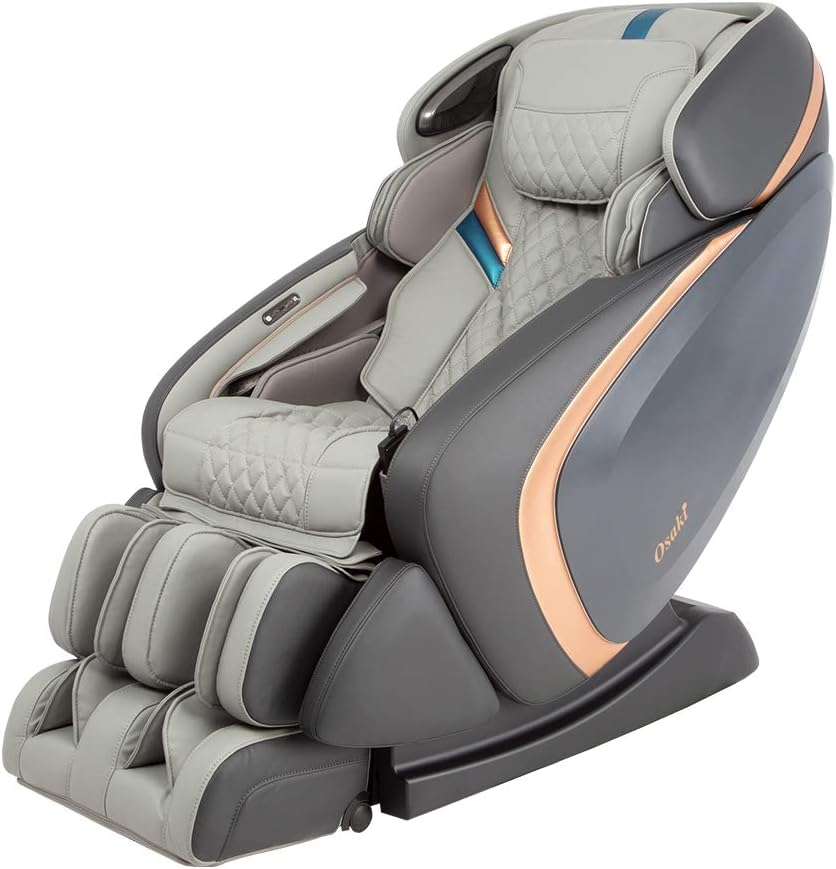
Osaki OS-Pro Admiral II
Best OverallFSA/HSA EligibleThe Admiral II earns the top spot for chronic pain because it covers every core requirement at a reachable price: SL-track 3D rollers, lumbar heat, two zero-gravity positions, 185 Amazon reviews at 4.3 stars, and FSA/HSA eligibility. Its 8-roller system targets the lumbar area more precisely than most chairs at this price, and the FSA/HSA pathway gives chronic pain patients a real option to buy with pre-tax health dollars.
- FSA/HSA eligible, the strongest medical justification pathway for chronic pain
- 185 Amazon reviews at 4.3 stars, more real-world data than most picks
- SL-track covers neck to glutes for full chronic back pain coverage
- 16 programs include stretch and targeted back modes
- 3D, not 4D, so less depth control than 4D chairs
- Lumbar heat only, no foot or calf heat zone
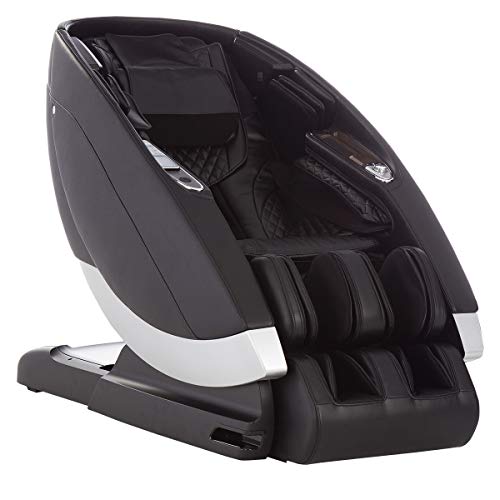
Human Touch Super Novo
Best PremiumThe Super Novo is the most feature-complete chair for serious chronic pain management. Three zero-gravity positions allow precise spinal decompression adjustment, 38 programs cover every pain scenario, and dual lumbar plus feet heat zones address both back and lower extremity pain. At $9,999 it demands justification, but for daily chronic pain users who can stretch budget, the program depth and heat coverage set it apart.
- 3 zero-gravity positions, the most precise spinal decompression of any pick
- Dual lumbar and feet heat zones for full lower-body coverage
- 38 wellness programs including stretch and recovery modes
- 128 Amazon reviews at 5.0 stars
- Not FSA/HSA eligible
- $9,999 price point requires strong justification
- 3D roller system, not 4D, so intensity ceiling is lower than 4D chairs
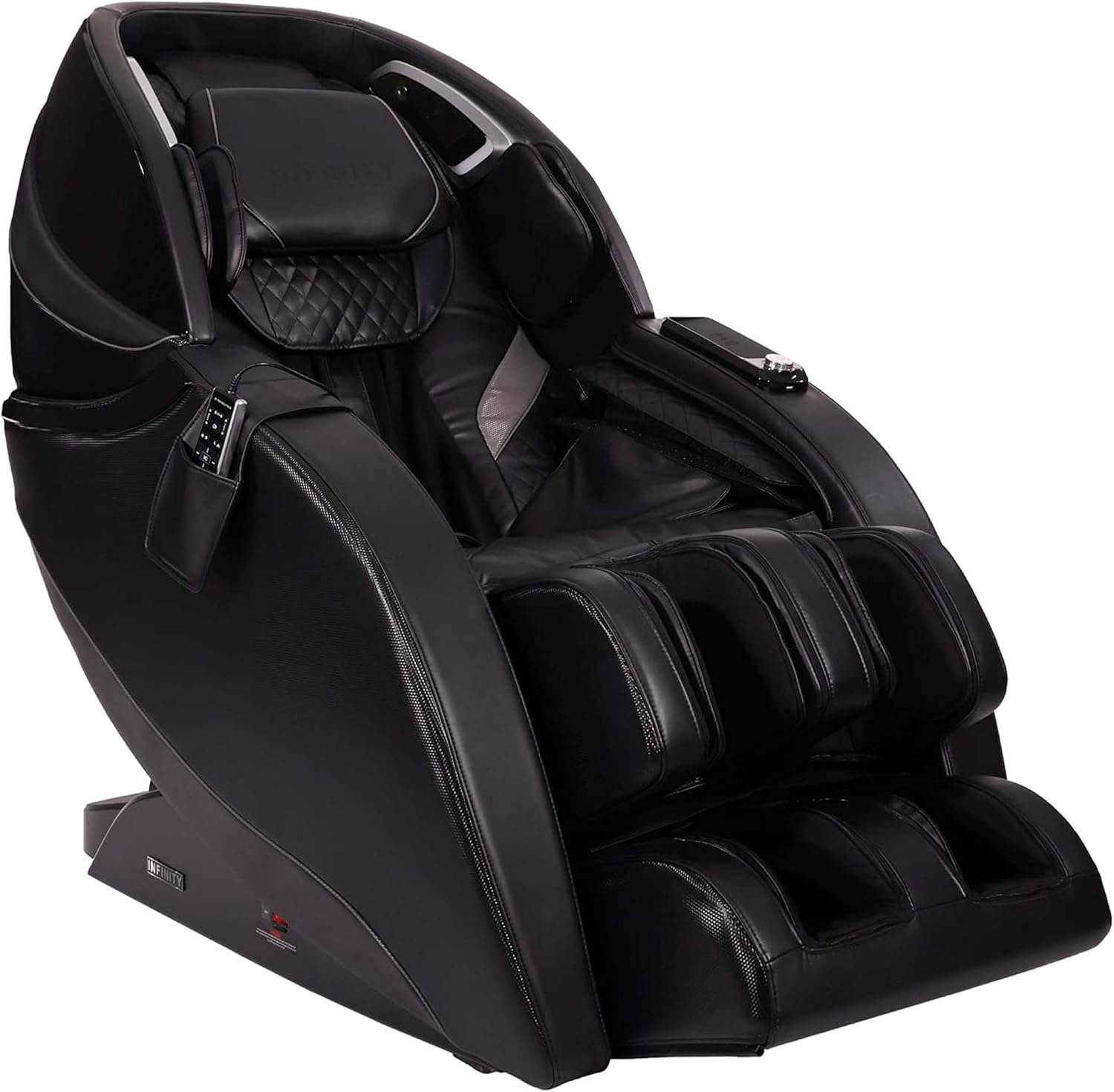
Infinity Evolution Max 4D
Best for Deep TissueThe Evolution Max 4D's 49-inch L-track with 4D rollers produces the most human-like deep tissue massage in this group. The in-out depth adjustment mimics a therapist's knuckle pressure. It's the best pick for chronic pain users who need strong muscle work rather than gentle relaxation, particularly for tight musculature and trigger point relief.
- 4D rollers on a 49-inch L-track, longest coverage and most depth control
- 78 Amazon reviews at 4.4 stars
- 32 airbags across 64 air cells
- Lumbar heat only, no foot or calf heat zone
- 4D deep tissue is too intense for fibromyalgia, not recommended for that condition
- Not FSA/HSA eligible
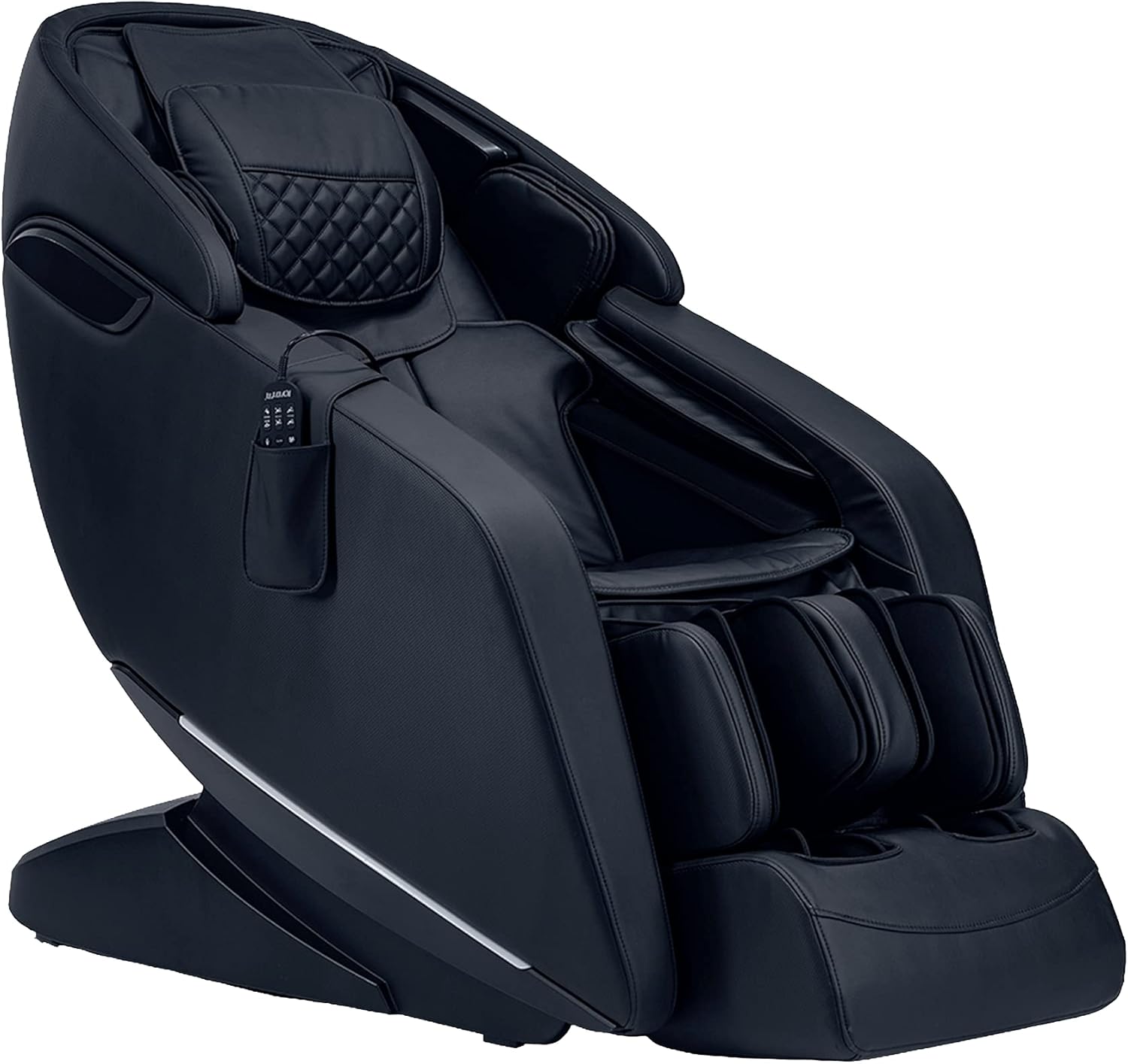
Kyota Genki M380
Best Value / FSA EligibleFSA/HSA EligibleThe Genki M380 is the most accessible FSA/HSA eligible chair with solid chronic pain credentials. Its lighter massage intensity makes it the best choice for fibromyalgia patients who need adjustable, gentle pressure. At $2,999 with FSA reimbursement potential, the effective out-of-pocket cost can drop well below other picks on this list.
- FSA/HSA eligible, the strongest budget-friendly FSA option
- 95 Amazon reviews at 4.4 stars
- SL-track with intelligent body scanning
- Lighter intensity ideal for fibromyalgia and pressure-sensitive users
- Single zero-gravity position
- Lumbar heat only
- Lighter intensity may not satisfy users needing deep tissue work
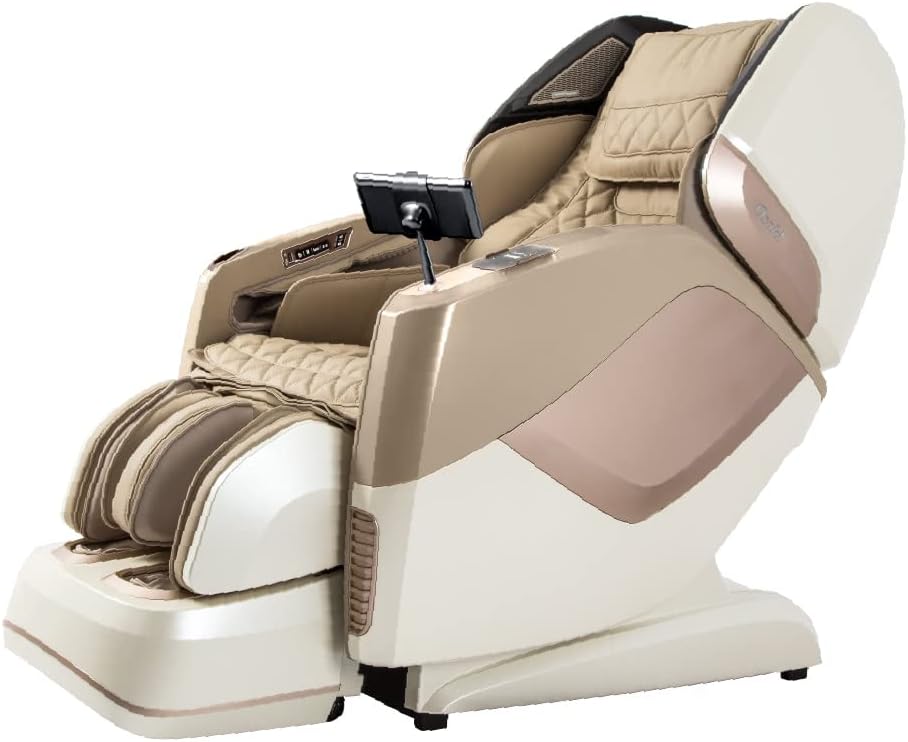
Osaki OS-4D Pro Maestro LE
Best Full-Body HeatThe Maestro LE is the best choice for users whose chronic pain extends beyond the lumbar. Dual lumbar plus feet heat zones address lower back and lower extremity pain at the same time. Its 4D SL-track covers the full spine and pairs with 36 airbags. It's the strongest pick for arthritis patients with both spinal and extremity involvement.
- Dual lumbar and feet heat zones for full lower-body heat coverage
- 4D rollers on SL-track with depth control plus full spine coverage
- 36 airbags for full-body compression
- Not FSA/HSA eligible
- No Amazon review volume data available
- At $8,889, approaches premium pricing without the Super Novo's program count
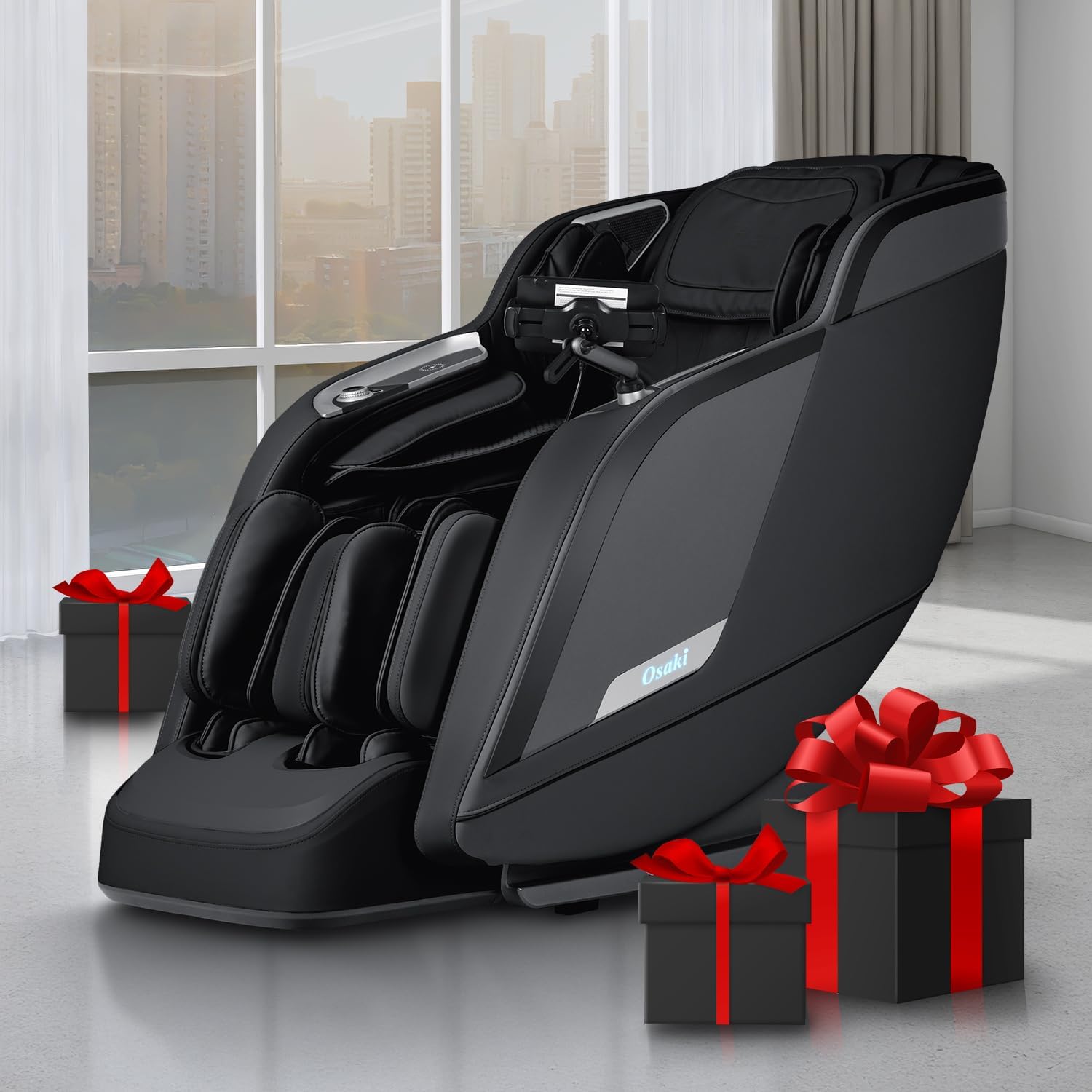
Osaki Vibe 4D
Best Under $4,000 (4D)The Vibe 4D is the most capable 4D option under $4,000, combining dual heat zones, two zero-gravity positions, and a full SL-track. Those features cost $5,000 or more in most lineups. For chronic pain users who want 4D depth control without the premium price tag, the Vibe fills the gap between the Admiral II and the Evolution Max.
- 4D rollers on SL-track, best combination at this price
- Dual lumbar and feet heat zones
- Two zero-gravity positions
- No Amazon review volume available, newer model
- Not FSA/HSA eligible
- Amazon rating noted at 4.3 with limited user feedback
Chronic Pain Massage Chair Comparison Table
All six picks side by side. Scroll horizontally on mobile to see every column.
| Spec | Osaki OS-Pro Admiral II | Human Touch Super Novo | Infinity Evolution Max 4D | Kyota Genki M380 | Osaki OS-4D Pro Maestro LE | Osaki Vibe 4D |
|---|---|---|---|---|---|---|
| Model | Osaki OS-Pro Admiral II | Human Touch Super Novo | Infinity Evolution Max 4D | Kyota Genki M380 | Osaki OS-4D Pro Maestro LE | Osaki Vibe 4D |
| Track Type | SL-Track | L-Track | L-Track | SL-Track | SL-Track | SL-Track |
| Massage Type | 3D | 3D | 4D | 3D | 4D | 4D |
| Weight Capacity | 265 lbs | 285 lbs | 300 lbs | 330 lbs | 300 lbs | 300 lbs |
| Recline Angle | 180° | 180° | 180° | 180° | 180° | 180° |
| Airbags | 24 | 38 | 32 | 24 | 36 | 24 |
| Zero Gravity | ✓ | ✓ | ✓ | ✓ | ✓ | ✓ |
| Heat Therapy | ✓ | ✓ | ✓ | ✓ | ✓ | ✓ |
| Body Scan | ✓ | ✓ | ✓ | ✓ | ✓ | ✓ |
| Bluetooth | ✓ | ✓ | ✓ | ✓ | ✓ | ✓ |
| Wall Hugger | ✓ | ✓ | ✗ | ✓ | ✓ | ✓ |
| Warranty | 3-year limited warranty with 1 year in-home service | 5-year limited warranty with 1 year in-home service | Lifetime frame, 3-year parts, 1-year labor | 4-year frame, 2-year parts, 1-year in-home labor | 5-year limited warranty with in-home service | 3-year limited warranty |
| Street Price | $3,999 | $9,999 | $5,999 | $2,999 | $8,889 | $3,995 |
Check Prices on Our Top Picks
Prices change often. These links go to Amazon where you can verify current pricing and read buyer reviews.
Chronic Pain by Type: Which Chair Features Help Most
Different chronic pain conditions respond to different chair features. Here's a breakdown by condition.
Fibromyalgia
Fibromyalgia patients should avoid maximum deep tissue intensity. High-pressure rollers can trigger pain flares instead of relieving them. Start at intensity level 2 or 3 and increase over weeks. Look for: wide intensity range, heat therapy, Swedish or kneading modes, and zero gravity. The Kyota Genki M380's lighter touch makes it the strongest pick for fibromyalgia. The Admiral II also supports gentle settings.
Arthritis
Heat and airbag compression help arthritic joints the most. Lumbar heat addresses spinal arthritis; dual heat zones (lumbar plus feet) cover lower extremity joints. Zero gravity reduces pressure on weight-bearing joints. The Maestro LE's dual heat zones and 36 airbags make it the top pick for arthritis with multi-joint involvement.
Neuropathy
Peripheral neuropathy responds to foot rollers and calf/foot airbag compression, which stimulate circulation in the lower extremities. Gentle vibration modes also help. Avoid high-intensity roller programs on numb areas, since you can't feel when pressure is too high. The Evolution Max 4D and Admiral II both have foot roller systems.
General Chronic Back and Neck Pain
4D deep tissue rollers on an SL-track or L-track give the broadest coverage for general chronic pain. Zero gravity decompression reduces spinal load, and body scan targets the rollers to your specific problem areas. The Evolution Max 4D has the longest track (49 inches) and the most aggressive deep tissue capability in our picks.
Zero Gravity and Spinal Decompression for Pain Relief
Zero gravity positions your body at a 120 to 130 degree angle between torso and thighs. At this angle, your body weight spreads across the chair surface instead of compressing your lumbar discs. The gravitational load on your spine drops, which lets the rollers work on relaxed muscles rather than fighting compressed tissue.
A randomized controlled trial published in PubMed Central (PMC7220115) compared massage chair therapy to traditional physiotherapy. The study found that massage chairs produced meaningful pain reduction, and zero gravity positioning was part of the treatment protocol. The chair didn't match physiotherapy's efficacy, but it produced results at a fraction of the ongoing cost.
Two zero-gravity positions is the minimum for chronic pain use. The Admiral II, Evolution Max 4D, Maestro LE, and Vibe 4D all have two positions. The Super Novo has three, giving the most precise adjustment for spinal decompression. Single-position chairs (like the Genki M380) still provide benefit but less flexibility to fine-tune the angle.
FSA and HSA: Can You Use Pre-Tax Money for a Massage Chair?
Massage chairs are not automatically FSA/HSA eligible. You need a Letter of Medical Necessity (LMN) from your doctor to qualify. The LMN states that a massage chair is medically necessary for your specific condition.
Chronic pain diagnoses are among the most common qualifying conditions for LMN approval. Fibromyalgia, arthritis, and musculoskeletal disorders all qualify in most plans. Your doctor writes the letter, you submit it to your FSA/HSA administrator, and you can then purchase with pre-tax dollars.
Two chairs in our picks are marketed as FSA/HSA eligible: the Osaki Admiral II ($3,999) and the Kyota Genki M380 ($2,999). Payment processors like Sika Health and Flex can handle the transaction directly. The tax savings of 20% to 35% (depending on your bracket) can reduce a $3,000 chair to an effective cost of $1,950 to $2,400.
For a full breakdown of the FSA/HSA process, see our FSA/HSA eligible massage chairs guide. Note: this is not tax advice. Eligibility depends on your individual plan and LMN. Consult your healthcare provider and plan administrator.
How To Use a Massage Chair Safely for Chronic Pain
A 12-week randomized controlled trial (PMC10520820) studying massage chair use for neck and shoulder pain in office workers found significant decreases in pain symptoms and statistically significant increases in pressure pain threshold. The participants used regular, moderate sessions over the study period. Here's how to apply that approach to chronic pain:
- Start with 10 to 15 minute sessions. Your muscles need time to adapt. Jumping to 30-minute sessions can leave you sore, especially with fibromyalgia.
- Use low intensity first. Increase roller pressure over 2 to 3 weeks. Chronic pain patients who start too high often experience temporary flare-ups.
- Daily use is fine for most chronic conditions. Keep sessions at 15 to 20 minutes. The PMC10520820 study protocol used consistent, regular sessions for best results.
- Skip sessions during acute flare-ups. If your pain spikes from an injury or sudden worsening, rest first. Massage rollers on inflamed tissue can aggravate the problem.
- Activate heat before rollers. Turn on lumbar heat at the start of each session. The warmth loosens tight tissue before the rollers apply pressure.
“For chronic pain patients, intensity control matters more than how many programs a chair has. A chair with a 10-level intensity scale that goes genuinely low is more valuable to a fibromyalgia patient than a 4D chair locked above medium. Check the minimum intensity before you buy.”— David Paul, Massage Chair Analyst
Massage Chair vs. Regular Massage for Chronic Pain
Professional massage therapists have superior technique. They can adapt pressure in real time, target specific trigger points by feel, and adjust their approach session by session. A randomized controlled trial (PMC7220115) found that physiotherapy produced better outcomes than massage chair therapy for pain reduction.
Massage chairs win on accessibility and cost per session over time. Weekly massage therapy runs $4,160 to $7,800 per year (based on $80 to $150 per session). A $3,000 to $6,000 massage chair pays for itself in 6 to 18 months and lasts 10 to 20 years with maintenance. You can also use it daily without scheduling.
The best approach for chronic pain: use a massage chair as a daily supplement to periodic professional sessions. The chair handles maintenance between appointments. The therapist handles targeted treatment that a machine can't replicate. If you're considering whether a chair justifies the investment, see our are massage chairs worth it analysis.
Buying Guide: What To Look for at Each Budget
Under $3,500
The Kyota Genki M380 ($2,999) is the standout at this tier. It's FSA/HSA eligible, has SL-track coverage, body scan, lumbar heat, and zero gravity. The lighter intensity is an advantage for fibromyalgia patients. The main trade-off is a single zero-gravity position and 3D rollers instead of 4D.
$3,500 to $6,500
This range has the most options: the Admiral II ($3,999), Vibe 4D ($3,995), and Evolution Max 4D ($5,999). The Admiral II adds FSA/HSA eligibility and a larger review base. The Vibe 4D brings 4D rollers and dual heat zones under $4,000. The Evolution Max 4D has the longest L-track and strongest deep tissue capability. Pick based on your condition: FSA eligibility (Admiral II), budget 4D (Vibe 4D), or maximum depth (Evolution Max).
$7,000 and Up
The Maestro LE ($8,889) and Super Novo ($9,999) sit at the top. The Maestro LE is the heat champion with dual lumbar and feet zones plus 4D rollers. The Super Novo has 38 programs, three zero-gravity positions, and a 5.0 Amazon rating. Spending more doesn't always mean more pain relief. Intensity control matters more than price. These chairs justify the cost for daily users who need maximum program variety and heat coverage.
Frequently Asked Questions
Related Guides
- Best massage chairs for back pain — Our full back pain ranking with 7 picks across every budget
- Best massage chairs for sciatica — L-track and deep tissue picks that target sciatic nerve pain
- FSA/HSA eligible massage chairs — How to buy a massage chair with pre-tax health dollars
- Best massage chairs overall — Our main ranking with full specs across 10 categories
- Are massage chairs worth it? — A cost-per-use breakdown comparing chairs to spa visits